
KWANDE, GALADIMA, MAJEK AND SHARIF INUWA HEADLINE NIGERIA’S TOP TEN OUTSTANDING FA CHAIRMEN
September 25, 2026
MANCHESTER CITY REPORTEDLY FOUND GUILTY OF 114 OF 115 PREMIER LEAGUE CHARGES
September 25, 2026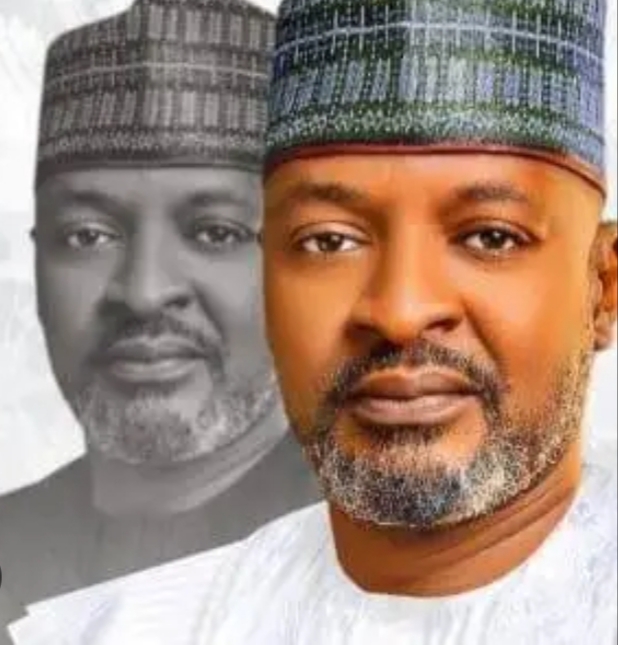
FROM THE PLATEAU GRASSROOTS TO FIFA: WHY SULEIMAN KWANDE’S FOOTBALL DEVELOPMENT RECORD DESERVES GLOBAL RECOGNITION
Beyond the politics of football administration, the real legacy may be the opportunities created for players, clubs, referees and communities
By Adewale Ajayi
Football development is often measured by the trophies displayed in cabinets, the number of international players produced or the success of professional clubs.
But there is another, less glamorous side of football development that rarely receives the attention it deserves.
It is the work done on dusty community pitches.
It is the local competition that gives an unknown teenager his first opportunity to be noticed.
It is the administrator who travels to watch a grassroots match.
It is the referee who receives an opportunity to develop.
It is the struggling club that receives institutional support when survival appears difficult.
And it is the football association that deliberately attempts to build a pathway from the village football field to the professional game.
This is where the football story of Honourable Suleiman Yahaya Kwande becomes particularly interesting.
As Chairman of the Plateau State Football Association, Kwande has placed grassroots development, talent identification, competitions and club support prominently within his football-administration agenda.
The argument, therefore, is not simply that Kwande deserves praise.
The bigger question is whether the model emerging from Plateau State deserves closer attention from the international football community.
FOOTBALL DEVELOPMENT BEGINS WHERE THE SPOTLIGHT ENDS
For FIFA and other football-development institutions, the grassroots are the foundation upon which the entire football pyramid is built.
Yet grassroots football remains one of the most difficult areas to develop.
There are no massive television audiences.
There are usually no lucrative sponsorship deals.
There are no multimillion-dollar transfer fees.
There are simply young footballers, local coaches, community clubs and administrators trying to create opportunities.
That is precisely why initiatives that bring organised competitions and talent identification closer to local communities matter.
Kwande has repeatedly spoken about the importance of taking football development to the grassroots, including organising competitions across local government areas and creating mechanisms for identifying young talents.
The philosophy is straightforward:
Do not wait for talent to find the system. Take the system to where the talent is.
That approach has particular relevance in Plateau State, a state with a long and distinguished football tradition.
FROM LOCAL PITCHES TO PROFESSIONAL OPPORTUNITIES
One of the most significant elements of the Plateau FA’s approach under Kwande has been the emphasis on competitions as talent-identification platforms.
The idea is simple but powerful.
A young footballer who may never have the opportunity to attend an expensive football academy can still play in a properly organised local competition.
If scouts are present, that player can be identified.
If professional clubs are involved, the player can potentially move to the next level.
And if the competition is properly structured, football becomes more than entertainment—it becomes a pathway.
The Jos South Chairman’s Cup, for example, was presented as a grassroots competition designed not only to promote football but also to provide opportunities for talent identification, with professional clubs such as Plateau United and Mighty Jets International expected to monitor matches and identify promising players.
This is the kind of connection between grassroots football and professional football that development programmes should seek to create.
KWANDE AND THE MIGHTY JETS CONNECTION
Kwande’s football story is also not entirely a story of administration from an office.
His association with Mighty Jets gives him direct experience of club football.
Reports have noted that he previously served as chairman of Mighty Jets when the club secured promotion to the Nigeria Premier Football League in 2004.
That experience matters.
A football administrator who understands the challenges of running a club—from players and coaches to logistics, funding and competition—approaches football development from a different perspective.
In 2024, Kwande also visited Mighty Jets International during its promotion campaign and expressed the Plateau FA’s support for the club.
He encouraged the players and provided financial assistance ahead of an away fixture.
Such gestures may appear modest when compared with the enormous financial figures surrounding modern football.
But at the grassroots and lower levels of the Nigerian game, relatively small interventions can sometimes determine whether a club survives a difficult period or whether players receive the opportunity to continue competing.
THE DEVELOPMENT OF REFEREES IS PART OF THE EQUATION
There is another aspect of football development that deserves attention.
Players cannot develop in isolation from the rest of the football ecosystem.
You need competent coaches.
You need qualified referees.
You need administrators.
You need scouts.
You need properly organised competitions.
You need facilities.
You need clubs capable of absorbing emerging talent.
Kwande’s early agenda at the Plateau State FA included the development of young referees alongside grassroots football and women’s football.
That is significant because referee development is often overshadowed by the attention given to players.
Yet without competent match officials, competitive football cannot function properly.
A serious football-development programme must therefore develop the entire ecosystem.
WOMEN’S FOOTBALL CANNOT BE LEFT BEHIND
Another important component of the development conversation is women’s football.
Nigeria has produced some of Africa’s greatest female footballers, and Plateau State has its own history of contributing to Nigerian football.
Any modern grassroots development strategy must therefore include girls as well as boys.
Kwande’s stated priorities have included women’s football, placing it alongside grassroots development and referee development.
That broader approach reflects an important reality:
Football development cannot be sustainable if half of the potential talent pool is ignored.
BEYOND PLATEAU STATE
Perhaps the most interesting aspect of Kwande’s football profile is that his activities are not confined to Plateau State.
His national football experience includes service on the Nigeria Football Federation Executive Committee, while his political career has included membership of the House of Representatives.
He has also been associated with the proposed Renewed Hope Unity Cup, a nationwide grassroots football initiative designed around participation across Nigeria’s local government areas.
The stated objectives include grassroots talent identification, youth engagement and national unity.
Whether such a massive project ultimately achieves all of its objectives will depend on its implementation, funding, organisation and sustainability.
But the concept reinforces a philosophy that has also been visible in Kwande’s work at state level:
football development should reach beyond the traditional football centres and create opportunities at the local level.
THE FIFA QUESTION
This brings us to the central question.
Should FIFA recognise Honourable Suleiman Yahaya Kwande for his contribution to football development in Plateau State?
Recognition does not necessarily have to mean a major international award.
It could mean documentation.
It could mean inclusion in a football-development case study.
It could mean inviting grassroots administrators such as Kwande to international football-development forums where successful local models can be discussed.
It could mean examining the Plateau experience and asking what lessons can be transferred to other regions.
Because the most valuable contribution of grassroots football administration may not always be measured in medals.
Sometimes it is measured in the number of young people who received an opportunity they would otherwise never have had.
THE LEGACY QUESTION
Every football administrator eventually faces the same question:
What did you leave behind?
Did you build structures?
Did you create opportunities?
Did you strengthen competitions?
Did you discover talent?
Did you develop officials?
Did you support clubs?
Did you create a pathway for the next generation?
Those are the questions that should form part of any serious assessment of football administration.
In Kwande’s case, the documented emphasis on grassroots competitions, talent identification, club support, women’s football and referee development provides a basis for examining his tenure through that development lens.
Of course, football development is never the work of one individual.
Players, coaches, clubs, sponsors, government officials, local organisers, referees and countless volunteers all contribute.
But leadership matters because somebody has to create the structure through which those contributions can become meaningful.
PLATEAU AS A POSSIBLE MODEL
Plateau State possesses something that many football regions would envy: a deep football culture.
The challenge is converting that culture into a sustainable development pipeline.
If grassroots competitions can consistently feed players into professional clubs, if referees can be developed alongside players, if women’s football receives meaningful opportunities, and if community football becomes properly connected to professional football, then the state can strengthen the bridge between grassroots participation and elite competition.
That is ultimately the significance of the Kwande approach.
It is not simply about one man.
It is about whether football administration can become a vehicle for creating opportunities.
FIFA SHOULD LOOK CLOSER
FIFA’s global football-development mandate extends far beyond the biggest stadiums and most famous players.
Football’s future is being created every day in communities around the world.
Plateau State is one of those communities.
And if the work being undertaken there continues to produce measurable opportunities for young footballers, clubs, referees and women in the game, then the model deserves to be documented and examined beyond Nigeria.
Honourable Suleiman Yahaya Kwande may ultimately be remembered not merely for the offices he occupied, but for the structures and opportunities he helped create.
That is the real currency of grassroots football administration.
And perhaps it is time for the international football community—including FIFA—to pay greater attention to administrators working at that level.
Because before a footballer plays in a World Cup stadium, a Champions League arena or a major African final, there is usually a first pitch.
A first coach.
A first competition.
A first scout.
A first opportunity.
Football development begins there.
And on the Plateau, Honourable Suleiman Yahaya Kwande has made that grassroots opportunity one of the defining themes of his football-administration agenda.